

Important Decisions
Sterile processing professionals make important decisions every day that affect patients, staff, workflows, and overall outcomes. Sustainability is part of that responsibility, but in healthcare, it must always align with safety and effective practice. The way devices are cleaned, rinsed, and prepared for sterilization plays a critical role in both. These foundational steps influence not only efficiency but also consistency and patient safety.
A Growing Concern Across the Industry
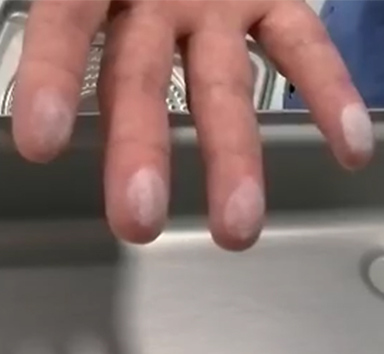
At this week’s HSPA annual conference, we had the opportunity to connect with colleagues across the industry, including customers, partners, and peers. One consistent theme emerged in conversation after conversation: taking short cuts instead of following best practices. An example cited is the presence of white residue on surgical instruments and container systems, including sealed systems like SteriTite. What stood out most is that this is not an isolated issue, but something observed across facilities, workflows, and manufacturers. Through these discussions, there was strong agreement that the residue is chemical in nature and that the industry is actively looking for answers.
Understanding the Source of Residue
The presence of residue is closely tied to how devices are cleaned before sterilization. In many cases, multiple chemical agents are introduced throughout the cleaning process, and when they are not fully removed, they remain on device surfaces. Conversations at HSPA highlighted that inadequate rinsing is a primary contributor, along with the use of incompatible chemistries and recycled wash water in cart washers and in ultrasonic cleaners, allowing residues to accumulate over time. The use of lubricants or drying agents as a final step after automated washing can further compound the issue.


Why Thorough Rinsing Matters
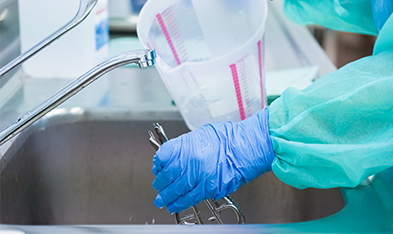
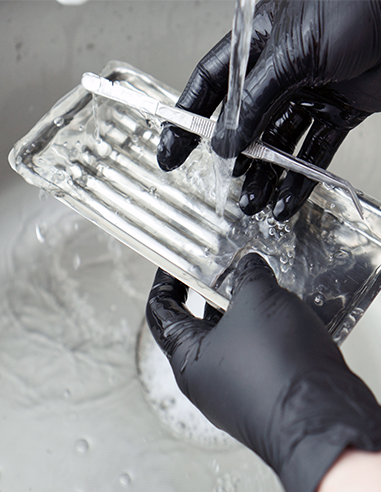
Effective decontamination is not only about applying the right cleaning agents, but about ensuring they are completely removed before sterilization begins. Residual chemicals can interfere with sterilization processes, leading to incomplete or canceled cycles and contributing to long-term instrument damage. These outcomes ultimately raise concerns about patient safety and process reliability. Thorough rinsing is a critical step that is sometimes underestimated in busy workflows. Even small adjustments, such as allowing adequate rinse time, can significantly improve consistency and outcomes.
Balancing Efficiency with Best Practice
Sterile processing departments operate under constant pressure to maintain efficiency, and workflow decisions are often made to save time. Discussions at HSPA highlighted practices such as the use of express cycles in place of dedicated instrument cycles. The opening keynote session, titled "Dissecting a Multi-Million Dollar Infection Case," brought this risk into sharp focus. It examined an Immediate Use Steam Sterilization (IUSS) failure that led to a preventable infection and ended the professional soccer career of former Portland Timbers goalkeeper, Jake Gleeson. The case illustrated how contaminated instruments and implants, combined with expedited processes, can have life-altering consequences. These insights reinforced the need to balance efficiency with strict adherence to best practices.

A Practical Path Forward
Sustainability in healthcare extends beyond environmental considerations and includes reducing rework, avoiding failed sterilization cycles, and protecting valuable instruments. The conversations at HSPA reinforced that the industry is aligned on the challenge and actively seeking solutions. What emerged is a clear understanding that improper cleaning and incomplete rinsing can compromise sterilization, leave harmful residues behind, and ultimately place patients at risk. The use of IUSS sterilization further increases concern, as residual moisture combined with inadequate cleaning can reduce effectiveness and create unpredictable results. A practical path forward requires a renewed focus on thorough cleaning, complete rinsing, and adherence to validated processes that prioritize safety over speed.
We invite you to connect with Case Medical to learn more about sustainable cleaning solutions that support safer, more reliable sterilization outcomes.
We invite you to connect with Case Medical to learn more about sustainable cleaning solutions that support safer, more reliable sterilization outcomes.