
Non-Chemical Critical Water for Healthcare Reprocessing
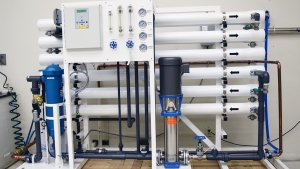
As we prepare to attend AAMI next week, we see an important opportunity to strengthen shared understanding of how water treatment decisions influence safety, compliance, and sterilization outcomes in healthcare reprocessing. Case Medical, recognized as a U.S. EPA Safer Choice Partner of the Year, approaches chemical safety as an essential part of protecting both staff and patients.
Centralized Sterile Processing: Opportunity, Risk, and the Path Forward
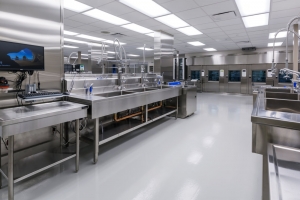
Reprocessing medical devices is a complex, multistep workflow that includes cleaning, inspection and assembly, functional testing, disinfection when required, packaging and labeling, sterilization, transport, and storage.
The KISS Principle for Instrument Processing
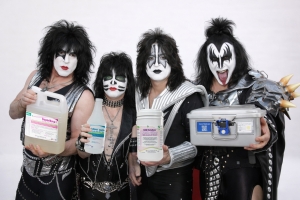
The last few blogs focused on the importance of standardization to decrease waste, remove unnecessary steps, improve turnover, and provide consistent workflow and increase efficiency. Currently, standardization and offsite processing are key buzz words for strategic plans to reduce handling and cut costs in SPD.
Standardization: The Missing Link in OR–SPD Communication

This week at the OR Leadership Summit, Case Medical connected with OR leaders to explore what it truly takes to achieve smoother operations, clearer communication, and reliable compliance. When communication breaks down between the operating room and sterile processing, the symptoms are easy to spot—late trays, incomplete sets, urgent phone calls, and last-minute workarounds.
Doing Business in a Sustainable and Non-Toxic Way

Every day seems to bring a new natural disaster or calamity, wildfires burning up New Mexico, western reservoirs drained to their lowest levels ever, extreme weather, flooding and landslides around the globe, can it get any worse? In a word, YES, yes it can if we don’t also stop poisoning ourselves with chemicals and products toxic to both humans and the environment.
Perservation Past & Present

Gels can preserve tissue and bioburden under a tough to remove clear coating. Jurassic Park, the book and movie was based on the notion that mosquitos were so well persevered in amber that dinosaur DNA could be recovered after millions of years. Well, pre-cleaning gels work much the same way, after a short time a sticky skin forms on the gel, trapping the debris beneath and becoming virtually impervious to cleaning. Enter the pre-cleaning gel, easy to use, and convenient, made to prevent soil from drying onto used instruments; is it wet or just an illusion?
COVID Variants: What You Should Know
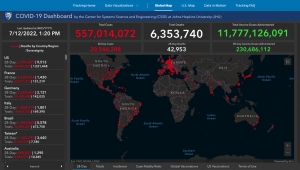
With 557,014,072 cases world wide and 88,847,699 cases in the U.S. alone, COVID19 is far from over.
The new variants raise questions… BA.4 and BA.5 are the fastest-spreading COVID-19 subvariants yet. The two latest versions of omicron appear to evade protection from vaccines and previous infections more easily than any others before.
A Better Package for Loaners
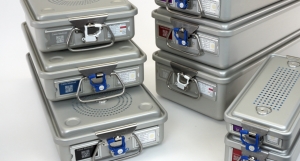
Believe it or not many facilities are still wrapping instrument sets. A torn wrapped tray can be detrimental to the OR schedule and to patients. Recently, a customer informed us that a U.S. veteran was scheduled to have surgery. The patient commuted with his family several hours to the large metropolitan hospital where surgery was scheduled, taking time off work and paying for hotel accommodations in the area.
The importance of lifelong learning
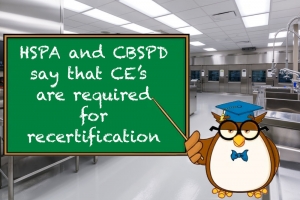
Tips to help you stay current for your professional career and personal growth. As a healthcare professional you’ve already made an investment of time and money into your career. Take a moment to reflect on your hard work and commitment, now congratulate yourself, you have accomplished a tremendous amount. But it doesn’t end there, according to CBSPD and HSPA, “the continuous renewal of certifications is crucial.” Here is how we can help...
It’s often said that the simple things are the best, so here are some simple suggestions…
Ever wonder why there is so much stuff in your department? I just went through my closets and got rid of the plastic bags hiding the clothes I haven’t worn in years and shoes that have collected over decades. First, I don’t wear heels anymore and knowing my age it would be downright dangerous. There are many reasons why we should simplify and make do with less at home and in the SPD. Sometimes it’s clear, like supply chain shortages and sometimes it’s because we’re questioning our toll on the environment or when we see our inventory shelves with simply too much stuff. How much of the stuff has never been used or is expired? But there are gray areas, too, holding onto stuff you think you might need or being convinced to buy something you don’t need. It’s easy to convince ourselves that “wants” are needs when we just really, really “want” something!